On the front cover image of The urban life of workers in post-Soviet Russia

On the background of hot debates about Russia, I got the final version of the front cover of my forthcoming book to be released just in four months, on 16 January 2024. Drawing on multi-sited ethnography, The urban life of workers in post-Soviet Russia: Engaging in everyday struggle creatively explores the lived experiences of working-class and wider deindustrialising communities in the cities of Moscow and Yekaterinburg, and beyond.

In this blog post, I would like to discuss the visual aesthetics of the book mainly focusing on its front cover image. It contains some elements of the poster The 1st of May. The All-Russian subbotnik created by graphic artist Dmitrii Moor (Orlov) in 1920. A brief overview of his life will help to explain better his artistic approach. Moor was born in the family of an engineer in Novocherkassk in 1883. After moving to Moscow in 1989, he got a vocational education and participated in the Revolution of 1905. This experience made him realise that he should present the voice of working-class people through the artistic means (see Kozlov, 1949). Moor did not have a formal art education, but inside the country, he was considered to be a People’s Artist, while his art was called ‘proletarian art’. To the international audience, Moor may be known for his avant-garde posters and political caricatures.

The photo of the poster The 1st of May. The-All Russian subbotnik by Dmitrii Moor (Orlov) taken by Alexandrina Vanke in the Lenin Library

In The 1st of May, Moor depicted working-class people on May Day engaged in building and maintaining not only the industrial urban infrastructure but also the fabric of everyday life. This visual representation of workers as acting aligns with my main argument about workers’ engagement in the creative forms of mundane resistance which, as I explain in the book, falls under the category of everyday struggle.

For the greater effect, Moor used a combination of black, beige and red colours which characterise his graphic art style. The message of his image is clear and concise. The poster realistically shows the urban life of workers and emphasises their class consciousness: the themes my book explores in detail. In the background, one can see the industrial urban landscape with the train, some factories and power lines telling us about industrialisation and electrification in the early-Soviet era. There are two inscriptions on the top reading ‘Russian Socialist Federation of the Soviet Republic’ and ‘Workers Of All Countries Unite!’ (see also). There is the capitalised poster title at the bottom.

In his poster, Moor glorifies subbotnik – the word derived from subbota meaning Saturday – which is a voluntary collective activity of cleaning and maintaining the urban infrastructure or the workplace emerged right after the October Revolution. Subbotniks usually took place on days off around Vladimir Lenin’s birthday on 22 April. Very quickly from a volunteer activity they turned to be free labour of Soviet people. Emerged in the early-Soviet era, subbotnik as a practice survived the dissolution of the USSR and has gained new meanings in contemporary Russia. In Chapter 7, I analyse top-down and grassroots subbotniks organised in one industrial neighbourhood where I did ethnography.

I especially enjoy that Moor’s image shows not only the strength of working-class men but also working-class women. Chapter 3 of my book considers power relations in deindsutrialising communities mediated by the intersections of class, gender, age and ethnicity/race.

Before I started writing the book, I thought that Moor’s image may be good for the front cover. To obtain this image in high resolution, I went to the Lenin Library in Moscow, ordered it from the archive and photographed it. As far as another poster was glued on the backside of The 1st May from the library’s collection, some of the bleedthrough from it are visible in my photo.

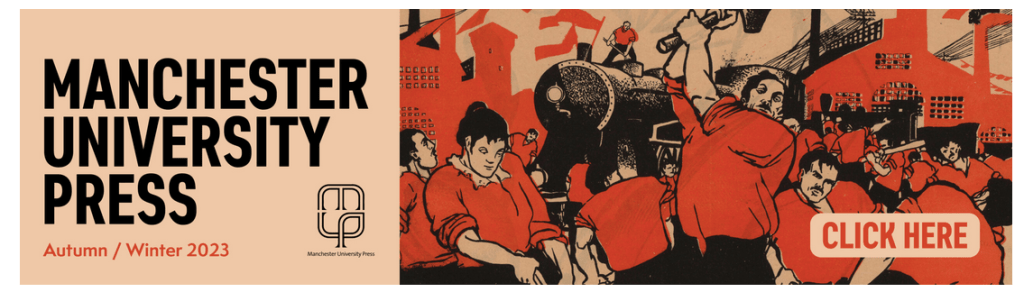
The image by Dmitrii Moor (Orlov) used for Autumn/ Winter 2023 catalogue of Manchester University Press

At the stage of book production, I suggested the publisher to use my photo of Moor’s poster for the front cover. It was so exciting to see that Manchester University Press put this image on the front cover of their Autumn/ Winter 2023 catalogue.

The MUP designer created several front covers for my book differed by the title fonts and colour shades. I am very glad that in its final version, Moor’s avant-garde image from The 1st of May aesthetically resonates with the title font of The urban life of workers in post-Soviet Russia.

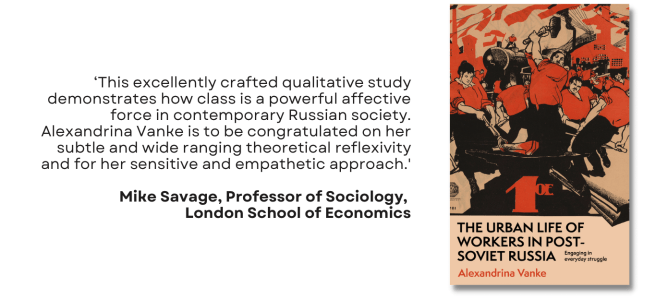
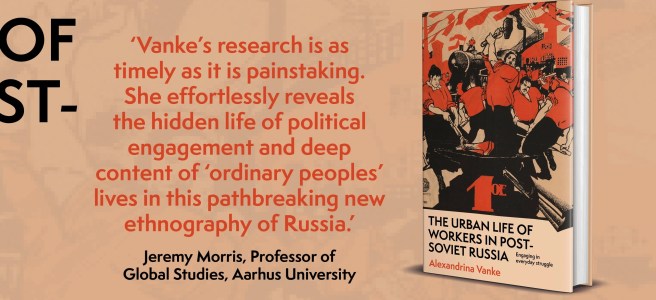
The final front cover of my book

You can find the book details and recommend it to your library on the website of Manchester University Press. The book is also available to pre-order via the following booksellers.

Research article on everyday inequalities and images of society

My new article Researching Lay Perceptions of Inequality through Images of Society: Compliance, Inversion and Subversion of Power Hierarchies has been published in Sociology journal.

Cite: Vanke, A. (2023). Researching Lay Perceptions of Inequality through Images of Society: Compliance, Inversion and Subversion of Power Hierarchies. Sociology, 0(0). https://doi.org/10.1177/00380385231194867

The article enhances our understanding of affective and imaginative power of social class by focusing on ordinary people’s lay perceptions of inequality in the example of Russia. I draw a special attention to the social imaginary by which I mean people’s capacity to evoke images in imagination and produce alternative visions of the future. This understanding follows from the conceptualisations of imaginary by Cornelius Castoriadis, Raymond Williams and Karine Clément. The article also explores the moral and symbolic signifiers of class, as well as a sense of inequality and a sense of social justice being formed within socio-material urban infrastructures.

The article may be of interest of those who apply (or would like to learn how to apply) arts-based methods in qualitative and innovative research. It explains how to utilise the method of ‘drawing of society’ initially introduced by Alexander Bikbov in his cross-national study of pupils’ and students’ perceptions of inequality and social justice. In my research, I develop this arts-based method in a multi-sited ethnography of deindustrialising communities in two major post-industrial cities of Russia.

I integrated the method of a drawing of society in an ethnographic interview. During the interviews, I asked research participants to draw Russian society and then explain what they drew. My database includes 35 drawings of society. I complemented these data with observation in deindustrialising urban areas where my ethnography took place.

The article explains in detail how to analyse drawings of society with other multi-sensory data.

My empirical research has shown that the members of deindustrialising communities, including workers and professionals, tend to imagine Russian society as divided between a small number of the rich and a large number of the poor, and as consisting of morally signified social classes.

I support this argument with three examples of images of society created by my research participants.

First, the image of a pyramid of classes was the most popular in my dataset. These drawings demonstrate a top-down power dynamic in Russian society visualising clear divisions between social classes. They often express ordinary people’s compliance with the established social order.

Second, I analyse the images of society with social portraits of people belonging to different social classes or classed groups. One of them is a drawing of ironically inverted power hierarchy in which the rich appeared to be depicted at the bottom, while the poor at the top. Notably, the middle class is absent in this drawing.

Finally, I analyse the image of a class conflict created by one research participant with the radical imagination. In this drawing, Russian society is divided between the greedy capital holders and ordinary people sub-divided into the active working classes and sleeping ‘vegetables’. This image shows an accumulation of ‘power from below’ aimed to subvert or challenge power hierarchy.

I support this argument with more evidence and examples in one chapter of my forthcoming book The urban life of workers in post-Soviet Russia: Engaging in everyday struggle, which is available to pre-order at the website of Manchester University Press or your preferred bookseller.

Applying creative ethnography in the study of deindustrialising neighbourhoods

I wrote a new blog post on creative ethnography in the study of everyday life in deindustrialising urban settings for SAGE Perspectives. It is based on my recent research article examining structures of feeling in Russia’s industrial neighbourhoods. You can read a full version of this blog here, if you are interested in knowing more about how to apply drawing and visual research methods in multi-sited ethnography .

Deindustrialisation is a global complex process. It leads not only to the closure of factories which would otherwise damage the environment but also negatively affects everyday life and job opportunities of working-class people. Deindustrialisation often goes hand in hand with neoliberal urban development resulting in gentrification and displacement of longstanding residents of former industrial neighbourhoods and council estates.  

Due to the multiple impacts of deindustrialisation on the lived experiences of local communities, it is important to develop multi-sensory approaches and innovative methodologies relevant for researching place attachment, sensual experiences and urban imaginaries of people residing in post-industrial urban areas.

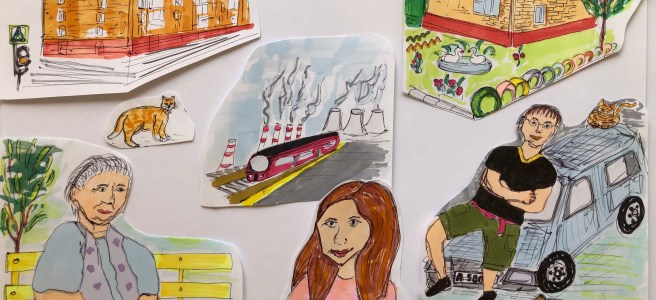
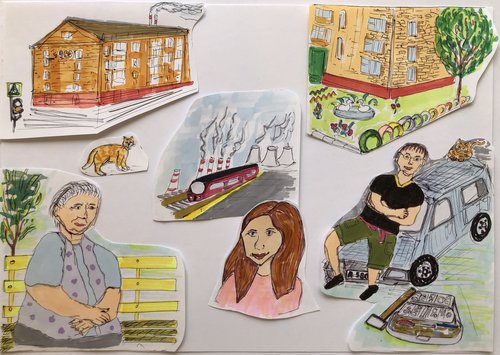
Illustration by Alexandrina Vanke based on ethnographic data from her research

In my study of two industrial neighbourhoods with mixed social compositions in the cities of Moscow and Yekaterinburg, Russia, I drew on the approach of multi-sited ethnography. Its research design built on a combination of the mainstream qualitative methods of interviewing, observation, participation and the creative method of drawing of the neighbourhoods studied made by research participants, also known as a mental mapping technique.

A mental map is a visualisation of the subjective perception of urban space by city dwellers. Kevin Lynch applied mental mapping in his study of the city images in the US. According to Lynch, each image of the city composed by many individual images, which share some similar visual patterns. In my research on Russia’s industrial neighbourhoods, I used mental mapping to explore structures of feeling as affective principles regulating sensual experiences, urban imaginaries and practical activities of local communities. Mental mapping was aimed to elicit how members of those communities sense and imagine their urban areas.

Continue reading in the SAGE Perspectives Blog.

Research article on structure of feeling

My new article Co-existing structures of feeling: Senses and imaginaries of industrial neighbourhoods is out in The Sociological Review. This post summarises its key points. This is a first publication from my doctoral project exploring working-class life and struggle in post-Soviet Russia, which I completed at the University of Manchester in 2021.

tsr-7026773185022708375-71-1-january-2023

In the article, I provide an empirically grounded theorisation of the concept of structure of feeling introduced by sociologist Raymond Williams. Williams defined structure of feeling differently in his works. According to one of his definitions, structure of feeling can be viewed as ‘the spirit of the age’ reflecting the collective cultural feelings of a period or an era. Williams’s another understanding of structure of feeling is related to the lived experiences of working-class communities which have a particular way of life.

While Williams applied structures of feeling mainly in regard to English literature and film, I suggest bringing this concept in sociology of space and place and urban anthropology. In the article, I extend structure of feeling, drawing on my multi-sited ethnography in two industrial neighbourhoods located in the cities of Moscow and Yekaterinburg, Russia.

I conceptualise structure of feeling by focusing on its affective mechanisms regulating senses, imaginaries and practical activities of residents of the two neighbourhoods studied. This ethnographic conceptualisation of structure of feeling allows me to explain better everyday life and local atmospheres in the urban areas undergoing deindustrialisation. The article answers the question of how working-class and longstanding middle-class residents sense and imagine their neighbourhoods.

The article builds on rich multi-sensory data derived from my PhD project: 50 interview transcripts, more than 150 pages of field notes, more than 550 photographs and 43 drawings of the industrial neighbourhoods made by research participants. I show how to apply multi-sited ethnography in the study of the lived experiences of local communities in two locations. I also explain how to use a method of drawing, also known as a mental mapping technique, in research on structures of feeling and deindustrialisation.

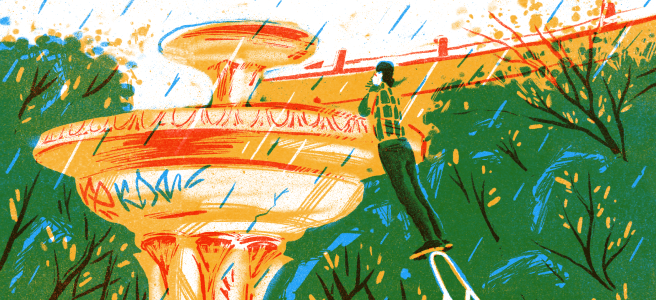
© The image by artist Polina Nikitina based on my ethnographic data

My research has revealed that working-class and longstanding middle-class residents show an affective attachment to place informed by an industrial residual structure of feeling. An industrial structure of feeling comprises values of factory culture, communality and shared space, while an emergent structure of feeling is informed by values of neoliberal development, individual comfort and private space. Both neighbourhoods studied have its particular local atmosphere driven by complicated relationships between socialist/ Soviet / industrial and post-socialist/ post-Soviet/ post-industrial structures of feeling. That is why, I suggest understanding structure of feeling not as a spirit of the time but as a multiple spirit of the time and place.

I develop further this theorisation in my book The urban life of workers in post-Soviet Russia: Engaging in everyday struggle to be published by Manchester University Press. Focusing on the issue of inequality, the book provides a novel account of urban life in post-industrial cities. One of its empirical chapters is partly based on this article.

You can find the article OnlineFirst on the website of The Sociological Review.

If you find the information from this post helpful and decide to use it in your publications, please cite:

Vanke, A. (2023). Co-existing structures of feeling: Senses and imaginaries of industrial neighbourhoods. The Sociological Review, 0(0). https://doi.org/10.1177/00380261221149540

The publications digest

There were no posts in this blog for ten months for some objective reasons. I am currently writing the book The urban life of workers in post-Soviet Russia to be published by Manchester University Press.  

In 2022, I had some publications, which came out but were not covered in the blog. This post presents the digest of those and forthcoming publications.

1. Together with Andrea Lizama and Denisse Sepúlveda, I co-edited a special section on social mobility and inequality issued in Sociological Research Online.

Cite article: Lizama-Loyola, A., Sepúlveda, D., & Vanke, A. (2022). Making Sense of Social Mobility in Unequal Societies. Sociological Research Online, 27(1), 95–100. https://doi.org/10.1177/13607804211066120

The special section takes a global perspective on different aspects of subjective social mobility and inequality. It includes six contributions covering the themes of political debate about social mobility in the UK and collective social mobility of working-class communities in Wales, intersectional inequality experienced by British-born Bengali Muslim women of working-class origin and educational mobility of people from different social backgrounds in Chile, social mobility of rural students in China and Chilean people’s experiences of long-range upward mobility shaped by meritocratic narratives.

Continue reading “The publications digest”

Как собрать данные в полевом качественном исследовании / How to Collect Data in Qualitative Field Research

Копия Как собрать данные_обл_13 мм (1)_page-0001Наше учебное пособие в соавторстве с Елизаветой Полухиной и Анной Стрельниковой “Как собрать данные в полевом качественном исследовании” вышло в Издательском доме Высшей школы экономики. Пособие содержит информацию о качественных методах сбора эмпирических данных, которые мы применяли в наших совместных проектах последних лет. Книга приглашает читателя к размышлению о методологическом инструментарии и вносит вклад в дискуссию о том, как исследователи могут решать методические проблемы, возникающие в ходе полевой работы.

Ссылка: А. В. Ваньке, Е. В. Полухина, А. В. Стрельникова. Как собрать данные в полевом качественном исследовании. М.: Изд. дом Высшей школы экономики, 2020.

Как собрать данные_обл_13 мм (1)_pages-to-jpg-0001

Our handbook in co-authorship with Elizaveta Polukhina and Anna Strelnikova ‘How to collect data in qualitative field research’ has been published by The Higher School of Economics Publishing House. The handbook provides information about qualitative methods of data collection that we applied in our team projects in recent years. The book invites the reader to reflect on methodological tools and contributes to the debate on how researchers can solve some methods issues emerging during fieldwork.

You can download Chapter 1 (in Russian) by following the link: Designing Qualitative Field Research.

Reference: Vanke, A., Polukhina, E., Strelnikova, A. (2020). Kak sobrat’ dannye v polevom kachestvennom issledovanii [How To Collect Data in Qualitative Field Research]. Moscow: The Higher School of Economics Publishing House. (In Russian).

Surviving the 3rd Year of the PhD: Or, How to Become a ‘Structure of Feeling’ Part 2

This is Part 2 of the post about my experience of writing PhD at the University of Manchester. You can read Part 1 here.

In the mid of January 2020, when I was coming back from Moscow to Manchester, some people in Europe already knew about the coronavirus from the news. However, most of them neither worried about it nor took it seriously. As for me, I was in reading research literature for my next empirical chapter.

Spring Semester: Stay Safe, Take Care and Write Thesis

Got back from winter break, I started writing chapter 5 on living life in two industrial neighbourhoods, where I undertook ethnography. In the chapter, I tried to explain the peculiarities of the spatial imaginary of Russian workers and other neighbourhoods’ residents with the help of Pierre Bourdieu’s concept of ‘a sense of place’ and Raymond Williams’ concept of ‘structure of feeling’. It took me three weeks to draft that chapter. Later, I spent three weeks more to improve it for the annual review 2020.

In February, most people from my network still did not worry about COVID-19, apart from my friend, a PhD student from China, who told me the news about the coronavirus, when I came back to the office. In the mid of February, I received feedback from my supervisory team. And then a new UCU strike began at 74 Universities across the UK. The strike lasted until March. Needless to say that striking was a very emotional (and emotionally tiring) experience. I presented my PhD research at the Sociology teach-outs. At the same time, I was mainly focused on writing the thesis. However, even a brief experience of taking part in collective actions was intellectually insightful for me and helped me to formulate my critical arguments.

IMG_3035
Sociology teach-outs during the UCU strike, the University of Manchester Students’ Union, February 2020 © Photo by the author

In chapter 4 on my research approach and methodology, I criticized those scholars who studied a working-class movement in Russia in the 1990s and argued that Russian workers were ‘patient’ (for example, see: Ashwin, 1999), capable only for survival and not for proactive actions. After the UCU strikes, it became clear for me that those scholars looked at Russian workers from the ‘Western’ perspective of strong trade unions with a long-standing history. While in Russia, independent trade unions began to emerge at the end of the 1990s and the beginning of the 2000s. However, in Russia workers were involved in everyday struggle of different forms ranging from everyday resistance to open protests (and it also happened in the Soviet era (for example, see: Piskunov, 2017)). Probably, I will move this critique to chapter 3 about the Russian context which was written as a literature review for the annual review 2018. I spent three weeks for drafting chapter 4 and sent it to my supervisors in the mid of March. In a week, a lockdown happened in the UK.

Life under Lockdown: Stay Home, Save Lives

It is really hard to describe my experience of living life under lockdown. Talking to friends and colleagues from the academic community via Zoom, Skype, Facebook and other messengers, I realized that University people employed three strategies of coping with lockdowns in different parts of the globe. Some academics said that they ‘just ignore it’ meaning that they did not worry about the news and death toll and continued working as usual. Some others tried dealing with their worries work-wise. The rest (and it was my case) could not be focused on work at all.

IMG_3374
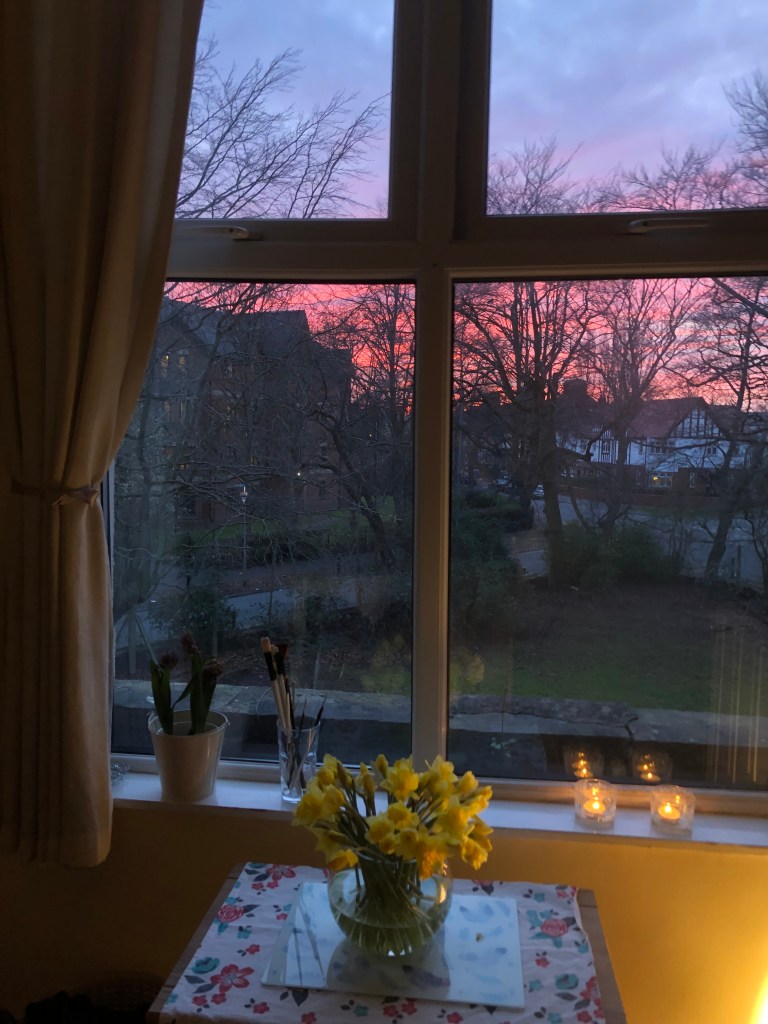
My window view, March 2020 © Photo by the author

In the first weeks of lockdown, I was very stressed and could not write the next chapter supposed to be about the theoretical framework. I tried making myself to read books on theory, which I found at home. Fortunately, I borrowed some of them from the University library before its closure due to COVID-19. However, it was hard to be focused even on reading. I worried about my family and beloved ones in Russia. Also, all flights between countries were stopped. And there were some delays in delivering food at the beginning of the UK lockdown if you buy it online. These altogether added more stress. I had a feeling that I had to survive, even though it was not true. I am aware that there are a lot of people who suffered much more than me. In my case, it was more about emotional survival.

I felt that my emotional resource was close to run out and I sought professional assistance from the therapist who helped me to cope with anxiety. I was in contact with my relatives and friends, and my supervisory team was very supportive at that time. In the mid of April, I came back to writing and managed to draft theoretical chapter 2, which of course still needs to be improved. While I stayed at home, I tried to pay attention to my body, soul and health. It may sound very Foucauldian. Anyway, I established a daily routine: waking up at 6.30 am and going to bed at 10 pm, doing yoga, cooking healthy food and going out to the courtyard to breath fresh air. I aired out the rooms regularly and kept them clean. Having one walk a day near the house building I got to know my neighbours better.

IMG_3741
A neighbour’s cat in their one walk a day, April 2020 © Photo by the author

At the same time, staying at home was a cultural experience for me. Here, I do not romanticize lockdown at all. In March, I subscribed to webpages of the museums, art galleries, theatres, and philharmonics opened online access to their cultural resources. Their wonderful streams helped me to cope with anxiety. I am very thankful to the Hermitage Museum in St. Petersburg, the Bolshoi Theatre in Moscow, the Berliner Philharmoniker, the Wiener Staatsoper, the Belvedere Museum Vienna, and many others for broadcasting their cultural events.

During lockdown, I finished reading The Story of the Lost Child by Elena Ferrante, the final book of the Neapolitan quartet, a series of novels telling the story of a friendship between two women who grew up in a working-class neighbourhood on the edge of Naples and had absolutely different life trajectories. The Neapolitan quartet gets the reader involved in a complicated relationship between two women and their relationships with other people of different backgrounds from their neighbourhood and other parts of Italy. It has your attention from the beginning to the end. I thought that I might borrow some literary forms from Ferrante’s novel and use them in my thesis. But then I realized that I need my ethnographic style.

Returning to the question about a ‘structure of feeling’

In the 3rd year, I was too focused on my doctoral research. To take my mind off it, I bought water-mixable oil paints and started painting whatever I saw around in Manchester and its surroundings. I never painted before and viewed this activity only as a hobby. Staying at home for a long time I painted my window view representing structures of feeling of Northern England. That’s how I tried to reflect in visual arts what structure of feeling was. One of my friends said that structure of feeling was ‘that historical atmosphere of being that can’t fully be explored retroactively’. In this piece of text, I tried to grasp that historical atmosphere, in which I have been writing my PhD.

Публикации 2018

В 2018 году вышли следующие мои статьи, посвященные исследованиям маскулинной телесности и территориальной идентичности в индустриальных районах.

Ваньке, Александрина (2018). Мужские тела, сексуальности и субъективности, Философско-литературный журнал Логос 28(4), сс. 85-108.

fresh-topleft.jpgАннотация. Углубление социального неравенства, которое автор связывает с глобальным распространением неолиберализма, усложняет систему властных отношений между мужскими телами и сексуальностями и ведет к дифференциации типов маскулинности. На материале 43 биографических интервью переосмысляются властные отношения внутри двух социально-профессиональных сред — так называемых синих и белых воротничков. Автор приходит к выводу, что через регулирование телесности сфера труда управляет эмоциональными отношениями и, как следствие, сексуальной жизнью мужчин из обеих групп. Наряду с этим режимы производственного и офисного труда генерируют разные логики управления мужской телесностью, которые воспроизводятся в приватной сфере и используются для создания мужской субъективности.
Основным ресурсом конституирования мужественности для рабочих служат физическая сила и умения, тогда как для офисных клерков — телесная репрезентация и перформанс. Следствием дифференциации в структуре труда становится неравенство возможностей создать «успешный» маскулинный субъект. Мужчины-рабочие называют себя «неудачниками», в то время как служащие считают себя «состоятельными», хотя и те и другие в равной степени выступают объектами эксплуатации. Телесный труд рабочего отчуждается в процессе управления телами на производстве, тогда как тело офисного клерка коммодифицируется и превращается в знак в системе символического обмена. Вместе с тем результаты исследования свидетельствуют о размывании средовых границ и ослаблении классового сознания, что позволяет мужчинам — рабочим и офисным служащим — применять сходные сексуальные стратегии, различающиеся лишь по форме и стилю. Маскулинная субъективность синих и белых воротничков включает одни и те же компоненты традиционной, либеральной и новой мужественности, которые отличаются по способам и формам выражения.

Ключевые слова:  мужчины; тело; сексуальность; синие воротнички; белые воротнички; труд; власть; эмоции; неравенство.


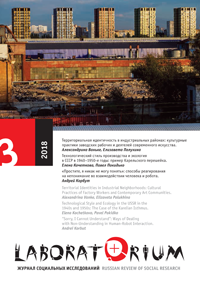
Ваньке, Александрина и Елизавета, Полухина (2018). Территориальная идентичность в индустриальных районах: культурные практики заводских рабочих и деятелей современного искусства, Laboratorium Журнал социальных исследований 10(3), сс. 4-34.

cover_issue_31_en_USАннотация. В статье рассматриваются территориальные идентичности, сформировавшиеся вокруг советских предприятий: завода имени И. А. Лихачева (ЗИЛ) в Москве и Уральского завода тяжелого машиностроения (Уралмаш) в Екатеринбурге. На примере двух кейсов авторы отвечают на вопрос о том, как создается территориальная идентичность индустриальных районов в постсоветской России. Авторы анализируют культурные практики в двух индустриальных районах и показывают, какой вклад в изменение их территориальных идентичностей вносят культурные акторы: представители творческих профессий и культурной среды, то есть научные работники, художники, архитекторы, фотографы, преподаватели высших учебных заведений, работники музеев, культурные и городские активисты. Исследование обнаруживает увеличение социального неравенства между резидентами индустриальных районов: рабочими и представителями других социальных групп. На фоне неолиберальной политики новые социальные акторы приходят в индустриальные районы, изменяя конфигурацию их социального состава. Оба кейса – территории вокруг завода имени И. А. Лихачёва и Уралмашзавода – демонстрируют наслоение разных типов идентичности и ассоциирующихся с ними культур рабочего и среднего классов. Так, в случае индустриальных районов мы можем говорить о множественной территориальной идентичности, которая выражается в том, что коренные жители и новые культурные акторы применяют классово дифференцированные «советские» и «постсоветские» культурные практики, воспроизводят «старые» и «новые» стили жизни.

Роль культурных акторов в формировании множественной территориальной идентичности индустриальных районов амбивалентна. С одной стороны, они вносят вклад в создание новой культурной среды и ведут работу по снятию маргинальных маркеров с промышленных территорий, делая эти районы более привлекательными для общегородских публик. С другой стороны, в процессе культурной экспансии резиденты индустриальных районов становятся «невидимой» социальной группой, лишенной возможности говорить публично. Культура рабочих, выражающаяся в практиках культурного потребления, сформировавшихся в советский период (например, посещение театров, музеев, домов культуры) и ремесленных навыках (например, вышивание, вязание, пошив одежды для женщин, а для мужчин создание предметов быта своими руками), обесценивается и не воспринимается как достойная внимания. Таким образом, деятельность культурных акторов вписана в общий тренд джентрификации и вытеснения рабочих за пределы промышленных территорий и публичного пространства. Вышеперечисленные процессы указывают на воспроизводство культурного, классового и территориального неравенств внутри индустриальных районов.

Ключевые слова: территориальная идентичность, индустриальный район, культурные практики, заводские рабочие, культурологический анализ классов

Sociological Debate on Inequalities in Russia and Beyond

My review Sociological Debate on Inequalities in Russia and Beyond has been published in the Russian Sociological Review.

The review considers the 5th All-Russian Sociological Congress held at the Ural Federal University in Yekaterinburg in October, 2016. The event, entitled “Sociology and Society: Social Inequality and Social Justice,” attracted more than 1000 delegates from Russia and abroad. The Congress took place against a background of increasing social inequality in Russia, following the economic crisis of 2015. The program included 17 sessions, 37 panels, and 35 round tables which covered burning topics such as the unequal distribution of resources in Russian regions, the reduction of social welfare, the low living standards of vulnerable social groups, the growth of ethnic tension, and others. One of the plenary talks was given by the president of the International Sociological Association, Margaret Abraham, who spoke on the humanistic mission of Sociology, and called to coalesce in the struggle against social injustice in the world. The discussions at the Congress have shown that sociologists in Russia follow the global trends in examining urgent social problems, as well as in reflecting methodological issues, e.g., the application of new approaches in inequality studies. The debate on the restriction of academic freedoms in Russia at the closing plenary session made it obvious that the solution to this problem can be found in professional solidarity and is the responsibility of everyone who belongs to the sociological community.

Read more: here.

The SAGE Encyclopedia of War: Social Science Perspectives

51yc7abn0pl-_sx258_bo1204203200_The SAGE Encyclopedia of War: Social Science Perspectives with my entry Fear of War has finally been released.

Fear of War

The humanitarian scientific literature contains various approaches to fear. In social sciences, especially in psychology, fear is considered as an emotional feeling or an affective reaction associated with a real or imaginary threat. It may be caused by past traumatic experience sensed in the present, or projected onto future situations. In sociology, anthropology, and history of emotions, fear is perceived as a social construct that is embedded into a particular context and produced with the help of interpersonal interactions in daily life. Frequently, fear relates to risks and is cultivated through connections with potential threats. To this extent, it ispossible to talk about different human phobias such as fear of death, fear of pain, fear of violence, and fear of war.

Continue reading…