How to craft a video abstract: reflection on making research visible

While all social media are now overflooded with posts about (and by) Generative AI, I have been thinking about how to make high-quality social research visible in the era of Large Language Models and all kinds of AI-based chatbots. Another reason for writing this blogpost is to reflect on my own experience of making video abstracts for the journal articles I published after completing my PhD.

If you are doing social sciences, your goal may be not only to get published but also to share your research outputs with other scholars and broader publics beyond academia. There are many ways in which one can make research publications visible and engage with publics, ranging from writing op-eds and blogposts to making visuals and video abstracts.

Video abstract formats

When I published my first PhD-based article on structures of feeling, I wanted to creatively disseminate it to share the results of my research with wider audiences. I decided to make a video abstract. My quick research into the types of video abstracts for journal articles found three of the most engaging formats.

The most popular one is talking videos, where academics talk about their publications to the camera. This is a less time-consuming video to make, which can be easily recorded with a phone or a laptop camera. However, it requires writing a script or carefully thinking about what you will say. You will probably need to make several takes before you are happy with your video. This option may be uncomfortable for those who do not like talking to the camera.

Another format is recorded video slides with the key findings presented on slides, combining text, images and animation. This may be more familiar to academics, as many were presenting online during (and after) the COVID-19 pandemic. These slides can be made with PowerPoint and recorded with Zoom. This format allows choosing whether to show a face or not, and the focus will be on your slides, not your talking head.

Finally, I came across several animated video abstracts without an author’s face, employing visual storytelling about research outputs. I enjoyed whiteboard animations based on publications, which amazingly combined verbal, textual and visual forms in research presentation. It was not obvious how to make them, but it was obvious that their production is time-consuming, even though they stimulate the creativity and curiosity of both researcher and audience.

Further, I will share my experience of crafting animated and talking video abstracts and conclude with reflections on their role in research visibility.

Animated video abstract

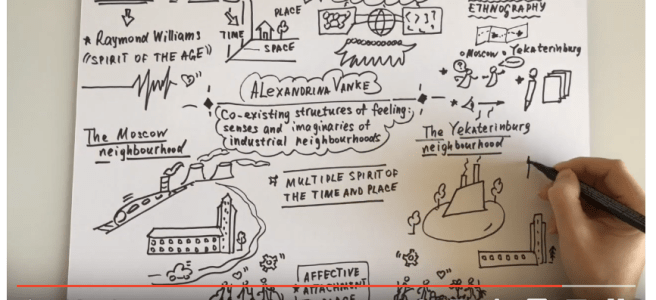
I decided to start with an animated video abstract, as I wanted to draw my article in the video. This prompted me to continue my search and learning. After watching animated videos about research, I found an educational course, From Verbal to Visual. From this online course, I learned how to use icons in sketchnoting, concisely visualise ideas with a black marker and use a video-editing software to combine a video of my graphic drawing, my audio explanation and background music.

It took me several days of creative thinking, learning and making until I crafted my first video abstract. I am sure some will view it as a luxury to spend so much time making an animated video abstract, especially under time pressure in academia. (I was crafting mine during the Christmas holidays). But for me, it was more about curiosity and learning how to make it and how to creatively disseminate research. Of course, when I crafted a second animated video abstract for my journal article on everyday inequalities, it was much easier and quicker. However, it still required time and energy for original thinking and crafting.

Despite all these efforts, I find the result amazing, even though it is far from perfect, but unique, like any handmade object. An animated video abstract reflects the idea of research as craft. This strongly resonates with my vision of doing creative ethnography, which my article on avant-garde methodology develops. This new article explains how to conduct multi-sited ethnography, use drawing and analytical assemblage in research, and creatively write with ethnographic data.

Talking video abstract

My experiences of making video abstracts broadened this year, when Sociology, the journal of the British Sociological Association, invited me to make a talking video about my article on everyday inequalities, which won the Sociology SAGE Prize for Innovation and Excellence 2025. In recent years, more and more academic journals have started suggesting their authors make video abstracts for published articles. In my opinion, Theory, Culture & Society provides really good examples of the talking video format, displayed on their journal website.

As for my experience, recording a talking video abstract for my article published in Sociology journal was split into four stages.

First, making a talking video requires writing and editing an accessible script for a three-minute video. I wrote this script, reread it and tried to tell it. Then I prepared a place and put the minimum equipment I had, a phone with a holder and a laptop camera, in two locations. Later, at the editing stage, I chose to work only with the video recorded with the phone, because it turned out to be better in terms of picture and sound. I decided to use a simple background which would not distract the viewer and put a table lamp on the floor to add cosy light, as it was rainy outside. I made a couple of shoots to check whether my face was in the frame and whether my voice was clearly heard.

At the second stage, ensure that there is no background noise from the window or anywhere else, which will disturb your video recording. Do not forget to put your phone on flight mode. Next, when you are recording a video abstract, it is better to talk about your research article, using a script as a reference and sometimes improvising, rather than reading a script. Natural talking makes a video abstract more engaging. (I know it is hard when you are talking to the camera). I did a couple of takes to choose the best one later.

The third stage includes editing a video abstract with a video-editing app or programme. I used iMovie, but you can use your preferred one, or skip this stage if you do not have time or the skills to use them. But then you need to record an almost perfect video, which does not need to be cut or improved. My talking video appeared to be twice as long as Sociology journal asked for. That is why I cut less important parts to make the video more concise and engaging. I should say that my video-editing skills are very basic. They still allowed me to add my title and name at the beginning and cut less important video frames.

At the final stage, I sent the video abstract and script to the editors of Sociology, who kindly helped me add subtitles. You can find this video abstract on my YouTube channel and it will be available on the Sociology journal website soon.

Is it worth making a video abstract?

Before making a video abstract, one may need to consider carefully whether all the effort and time spent is really worth it. On the one hand, academic journals follow the trend of encouraging authors to make video abstracts. The thing is that online users now consume more video content than textual and visual content. The probability that someone will become interested in your research article increases if they find your video abstract.

On the other hand, I have recently had a chance to discuss this issue with a senior academic who was sceptic about video abstracts and their dissemination on algorithm-based video streaming platforms. According to this position, it is not worth spending time making video abstracts, as they are not supported by algorithms and do not help increase the citation rate. If you are a recognised professor, your publications will be read without creative dissemination. However, early career researchers need to spend time for dissemination if they want their research outputs to rich academic and wider audiences.

It has been two and a half years since I posted a video abstract for my first PhD-based journal article on structures of feeling published behind a paywall. By now, it has reached 850+ views on YouTube, compared with 500+ reads of my blogpost with its summary, 1000+ reads on the journal website, and only eight citations in publications by other academics. This statistic tells us that video abstracts do not directly increase the citation rate, but they increase engagement with your article. For example, I regularly receive emails from people who want to read the article but cannot access it and ask me to share it with them. Some people (most of them students) contact me to say that my article helped them in their research.

As for the article on everyday inequality, also published behind a paywall, its animated video abstract got only 150+ views over the last two years. But the article and my research findings were mentioned in a conversation between three characters in one British film, and it has been cited five times by other academics so far. Again, there is no direct link between a video abstract and scholarly recognition. But what I see from this experience is that my research has become more visible thanks to the video abstracts, which I also posted on my social media accounts.

Are you curious about learning how to craft a video abstract? Are you interested in creative research dissemination? Are you looking for innovative ways of public engagement? If yes, then why not experiment with a video abstract and see what it may bring in terms of making your research visible? At the end of the day, why not give a video abstract a chance among research dissemination channels and public engagement tools?
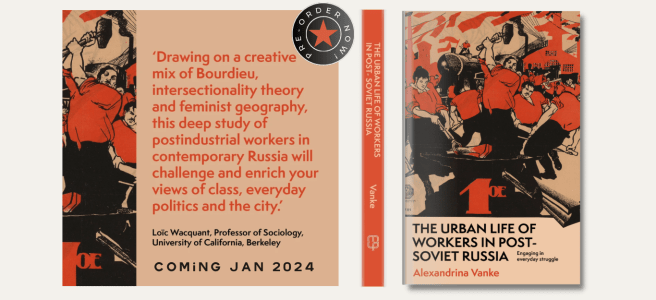
Paperback release incoming: what critics think about my book and why it matters for the class debate – Part 2

This is the second part of the blogpost with my response to the reviewers who engaged with ‘The urban life of workers in post-Soviet Russia’ to be released in paperback in January 2026. In this part, I would like to discuss some comments on my book by Paupolina Gundarina and Mitja Stefancic.

In her essay ‘“Soviet in post-Soviet” in Alexandrina Vanke’s book The Urban Life of Workers in Post-Soviet Russia: Engaging in Everyday Struggle’, published in Russian on the Syg.ma platform, Paupolina Gundarina provides a very sensitive and careful reading of my book. She views my research as ‘an ambitious and creative ethnographic description of workers’ communities, which opens up new dimensions of (the working) class, creativity, imagination and phenomenology of home’. 

Gundarina finds my methodology, drawing on multi-sited ethnography, innovative and creative. She especially highlights the participatory nature of my study, when I invited research participants to draw their neighbourhood and society, which allowed me to grasp their ‘affective experience[s]’. As the reviewer stresses, this methodology opens up new opportunities for the debate about emotions regarding deindustrialisation and their relationships with the Soviet legacy and ‘the issues of morality, trauma, nostalgia, loss and adaptation’. 

‘[T]his is an ambitious and creative ethnographic description of workers’ communities, which opens up new dimensions of (the working) class, creativity, imagination and phenomenology of home.’ Paupolina Gundarina

Continuing this discussion, I would place my methodology within two developing strands. On the one hand, it is situated within the range of ethnographies paying particular attention to sensory-ness, affect and the imaginary. On the other hand, it develops creative, visual and arts-based methods. In my forthcoming article, I call this approach ‘avant-garde methodology’ which generates alternative interpretations of class experiences.

Gundarina finds my revision of class struggle, which I reconsider within the everyday realm, as an important contribution to the Marxist debate on class and resistance. As she writes, ‘Vanke’s book challenges economic determinism showing that the working class in post-Soviet Russia is defined through everyday practices, spatial belonging and grassroots resistance, not just through employment status’. She correctly reads my argument about the formation of classes in Russia’s major cities as ‘a constant, contradictory process, which is influenced by both the Soviet legacy and neoliberal change’. 

As Gundarina discusses further the ethnographic examples from my book, ordinary people continue to implement Soviet practices in deindustrialising urban spaces. But indeed, in the neoliberal context, these practices gain new meanings, allowing residents of industrial districts to cultivate class feelings and attachment to place, for example, through collective maintenance and decoration of the depleting infrastructure remaining from the Soviet era. According to my approach, these practical activities fall under the category of everyday struggle.  

I especially enjoy that the reviewer included her Russian translation of some research participants’ quotes from the book and provided her example of the controversial local debates around a DIY swan created by a local resident of Barnaul, a Western Siberian city of Russia, and put in a public place.

The book review by Mitja Stefancic, published in the 50th Anniversary Issue of Network, magazine by the British Sociological Association, continues to discuss my book in light of the class debate. As he writes, ‘One of the main achievements of the book lies in its successful attempt to re-discuss the concept of class’. Stefancic stresses the importance of my research as it ‘shows how class in Russia means something different when compared, for example, to Western societies’. This conversation about classes continued in an interview with me by Stefancic published in SerbianEnglish and Italian. I am very grateful for this opportunity to discuss my research outputs beyond academia. 

‘One of the main achievements of the book lies in its successful attempt to re-discuss the concept of class. In fact, on a theoretical level, Vanke effectively shows how class in Russia means something different when compared, for example, to Western societies.’ Mitja Stefancic

Indeed, unlike Western countries with stable social structures, Russia has experienced political upheavals and socio-economic reconfigurations of social groups during the 1990s, which influenced how people perceive classes and inequalities. Since the dissolution of the Soviet Union, a new social structure is being formed in contemporary Russia framed by the neoliberal neo-authoritarian order of power. 

My field research conducted before 2022 revealed polarisation in the social structure with a split between the poor and the rich, as I argue in the book and in my article on lay perceptions of inequality (read its summary on Everyday Society). However, sociologically it is interesting to understand how the Russia-Ukraine war will reconfigure the social structure and redistribute social wealth and capitals between particular segments of Russian society.

Stefancic concludes that my book helps to understand better Russian society itself and will be of interest to those who are focusing on how working classes around the globe overcome life difficulties while being excluded from big politics. In light of the global shift of the political mainstream to the right, as discussed in the August issue of Global Dialogue, my approach to everyday struggle in restrictive conditions has the potential to be transferred to other contexts. 

On crafting illustrations for The urban life of workers in post-Soviet Russia

This is the third blogpost in the series about The urban life of workers in post-Soviet Russia. The book will be out in two months in January 2024. I am very excited about this and looking forward to receiving comments from the readers and reviewers.

From its short description, you may learn that the book draws on the ethnographic study with elements of arts-based research. Earlier I wrote about how I integrated poetry in academic writing (read here). In this post, I would like to explain how I used illustrations to support the textual narrative and my overarching argument.

The urban life of workers in post-Soviet Russia includes about 30 black and white illustrations of three types.

First, I illustrate one of my arguments about the complexity of socio-spatial imaginaries with drawings of the industrial neighbourhoods and Russian society made by research participants with a black pen. I obtained these drawings with verbal explanations during interviews with workers and professionals. Drawings with explanations are multi-sensory data created by participants. That is why I view my participants as co-creators of unique data for this ethnographic study. These drawings are as important as interview narratives and other data. They visualise the feelings of residents of the industrial neighbourhoods to their places of residence and their subjective perceptions of inequality and whole Russian society.   

Second, I use some ethnographic photographs taken during fieldwork in Moscow and Yekaterinburg cities. The photographs help to provide the reader with a sense of atmosphere in two locations studied. Some of them show the urban settings and infrastructure of the industrial neighbourhoods. Some others focus on practical activities of ordinary people, such as collective maintenance of deindustrialising areas and cultivating mini-gardens near social housing blocks. For illustrations, I selected those photographs that did not show particiapants’ faces to align with the ethical principles of anonymity. I also use a photograph of a massive May Day Demo in St. Petersburg by Pyotr Prinyov from the mid-2010s to explain better the restrictions for open protests in today’s Russia.

Finally, I crafted several graphic illustrations with the help of drawing skills that I learnt from artist Victoria Lomasko within our course ‘Avant-garde and arts-based methods in qualitative research’. With a black marker, I drew the portraits of some research participants, as well as workers of different ages, genders and ethnicities who I met in a post-industrial city. Moreover, I entitled the first part of the book ‘Theoretical sketches’ not only because ‘Poetical Sketches’ by William Blake inspired my writing. Synthesising a novel theory of urban life, this first part includes my graphic sketches visually explaining the conceptualisation of structure of feeling and everyday struggle.

In the book, I combine the textual register with the visual one to tell the story about the urban life of workers vividly and vibrantly. The idea of such a creative approach to academic writing is not (only) to entertain the reader but not to leave them indifferent.

If you are interested in writing a book review, you can request a free copy of The urban life of workers in post-Soviet Russia on the website of Manchester University Press (click here). If you can, please purchase the book via your University or local library to make it available to a wider community of readers (click here).

Research article on everyday inequalities and images of society

My new article Researching Lay Perceptions of Inequality through Images of Society: Compliance, Inversion and Subversion of Power Hierarchies has been published in Sociology journal.

Cite: Vanke, A. (2023). Researching Lay Perceptions of Inequality through Images of Society: Compliance, Inversion and Subversion of Power Hierarchies. Sociology, 0(0). https://doi.org/10.1177/00380385231194867

The article enhances our understanding of affective and imaginative power of social class by focusing on ordinary people’s lay perceptions of inequality in the example of Russia. I draw a special attention to the social imaginary by which I mean people’s capacity to evoke images in imagination and produce alternative visions of the future. This understanding follows from the conceptualisations of imaginary by Cornelius Castoriadis, Raymond Williams and Karine Clément. The article also explores the moral and symbolic signifiers of class, as well as a sense of inequality and a sense of social justice being formed within socio-material urban infrastructures.

The article may be of interest of those who apply (or would like to learn how to apply) arts-based methods in qualitative and innovative research. It explains how to utilise the method of ‘drawing of society’ initially introduced by Alexander Bikbov in his cross-national study of pupils’ and students’ perceptions of inequality and social justice. In my research, I develop this arts-based method in a multi-sited ethnography of deindustrialising communities in two major post-industrial cities of Russia.

I integrated the method of a drawing of society in an ethnographic interview. During the interviews, I asked research participants to draw Russian society and then explain what they drew. My database includes 35 drawings of society. I complemented these data with observation in deindustrialising urban areas where my ethnography took place.

The article explains in detail how to analyse drawings of society with other multi-sensory data.

My empirical research has shown that the members of deindustrialising communities, including workers and professionals, tend to imagine Russian society as divided between a small number of the rich and a large number of the poor, and as consisting of morally signified social classes.

I support this argument with three examples of images of society created by my research participants.

First, the image of a pyramid of classes was the most popular in my dataset. These drawings demonstrate a top-down power dynamic in Russian society visualising clear divisions between social classes. They often express ordinary people’s compliance with the established social order.

Second, I analyse the images of society with social portraits of people belonging to different social classes or classed groups. One of them is a drawing of ironically inverted power hierarchy in which the rich appeared to be depicted at the bottom, while the poor at the top. Notably, the middle class is absent in this drawing.

Finally, I analyse the image of a class conflict created by one research participant with the radical imagination. In this drawing, Russian society is divided between the greedy capital holders and ordinary people sub-divided into the active working classes and sleeping ‘vegetables’. This image shows an accumulation of ‘power from below’ aimed to subvert or challenge power hierarchy.

I support this argument with more evidence and examples in one chapter of my forthcoming book The urban life of workers in post-Soviet Russia: Engaging in everyday struggle, which is available to pre-order at the website of Manchester University Press or your preferred bookseller.

Applying creative ethnography in the study of deindustrialising neighbourhoods

I wrote a new blog post on creative ethnography in the study of everyday life in deindustrialising urban settings for SAGE Perspectives. It is based on my recent research article examining structures of feeling in Russia’s industrial neighbourhoods. You can read a full version of this blog here, if you are interested in knowing more about how to apply drawing and visual research methods in multi-sited ethnography .

Deindustrialisation is a global complex process. It leads not only to the closure of factories which would otherwise damage the environment but also negatively affects everyday life and job opportunities of working-class people. Deindustrialisation often goes hand in hand with neoliberal urban development resulting in gentrification and displacement of longstanding residents of former industrial neighbourhoods and council estates.  

Due to the multiple impacts of deindustrialisation on the lived experiences of local communities, it is important to develop multi-sensory approaches and innovative methodologies relevant for researching place attachment, sensual experiences and urban imaginaries of people residing in post-industrial urban areas.

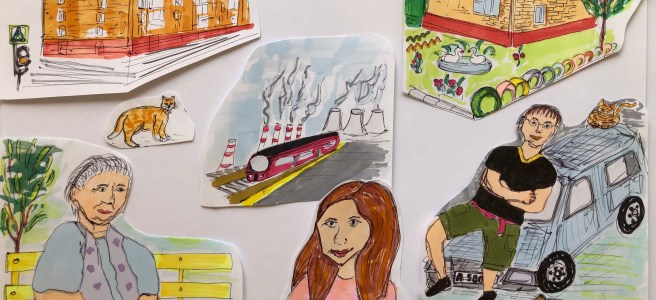
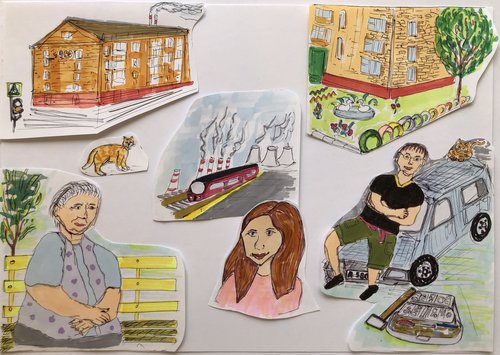
Illustration by Alexandrina Vanke based on ethnographic data from her research

In my study of two industrial neighbourhoods with mixed social compositions in the cities of Moscow and Yekaterinburg, Russia, I drew on the approach of multi-sited ethnography. Its research design built on a combination of the mainstream qualitative methods of interviewing, observation, participation and the creative method of drawing of the neighbourhoods studied made by research participants, also known as a mental mapping technique.

A mental map is a visualisation of the subjective perception of urban space by city dwellers. Kevin Lynch applied mental mapping in his study of the city images in the US. According to Lynch, each image of the city composed by many individual images, which share some similar visual patterns. In my research on Russia’s industrial neighbourhoods, I used mental mapping to explore structures of feeling as affective principles regulating sensual experiences, urban imaginaries and practical activities of local communities. Mental mapping was aimed to elicit how members of those communities sense and imagine their urban areas.

Continue reading in the SAGE Perspectives Blog.

Research article on structure of feeling

My new article Co-existing structures of feeling: Senses and imaginaries of industrial neighbourhoods is out in The Sociological Review. This post summarises its key points. This is a first publication from my doctoral project exploring working-class life and struggle in post-Soviet Russia, which I completed at the University of Manchester in 2021.

tsr-7026773185022708375-71-1-january-2023

In the article, I provide an empirically grounded theorisation of the concept of structure of feeling introduced by sociologist Raymond Williams. Williams defined structure of feeling differently in his works. According to one of his definitions, structure of feeling can be viewed as ‘the spirit of the age’ reflecting the collective cultural feelings of a period or an era. Williams’s another understanding of structure of feeling is related to the lived experiences of working-class communities which have a particular way of life.

While Williams applied structures of feeling mainly in regard to English literature and film, I suggest bringing this concept in sociology of space and place and urban anthropology. In the article, I extend structure of feeling, drawing on my multi-sited ethnography in two industrial neighbourhoods located in the cities of Moscow and Yekaterinburg, Russia.

I conceptualise structure of feeling by focusing on its affective mechanisms regulating senses, imaginaries and practical activities of residents of the two neighbourhoods studied. This ethnographic conceptualisation of structure of feeling allows me to explain better everyday life and local atmospheres in the urban areas undergoing deindustrialisation. The article answers the question of how working-class and longstanding middle-class residents sense and imagine their neighbourhoods.

The article builds on rich multi-sensory data derived from my PhD project: 50 interview transcripts, more than 150 pages of field notes, more than 550 photographs and 43 drawings of the industrial neighbourhoods made by research participants. I show how to apply multi-sited ethnography in the study of the lived experiences of local communities in two locations. I also explain how to use a method of drawing, also known as a mental mapping technique, in research on structures of feeling and deindustrialisation.

© The image by artist Polina Nikitina based on my ethnographic data

My research has revealed that working-class and longstanding middle-class residents show an affective attachment to place informed by an industrial residual structure of feeling. An industrial structure of feeling comprises values of factory culture, communality and shared space, while an emergent structure of feeling is informed by values of neoliberal development, individual comfort and private space. Both neighbourhoods studied have its particular local atmosphere driven by complicated relationships between socialist/ Soviet / industrial and post-socialist/ post-Soviet/ post-industrial structures of feeling. That is why, I suggest understanding structure of feeling not as a spirit of the time but as a multiple spirit of the time and place.

I develop further this theorisation in my book The urban life of workers in post-Soviet Russia: Engaging in everyday struggle to be published by Manchester University Press. Focusing on the issue of inequality, the book provides a novel account of urban life in post-industrial cities. One of its empirical chapters is partly based on this article.

You can find the article OnlineFirst on the website of The Sociological Review.

If you find the information from this post helpful and decide to use it in your publications, please cite:

Vanke, A. (2023). Co-existing structures of feeling: Senses and imaginaries of industrial neighbourhoods. The Sociological Review, 0(0). https://doi.org/10.1177/00380261221149540

The publications digest

There were no posts in this blog for ten months for some objective reasons. I am currently writing the book The urban life of workers in post-Soviet Russia to be published by Manchester University Press.  

In 2022, I had some publications, which came out but were not covered in the blog. This post presents the digest of those and forthcoming publications.

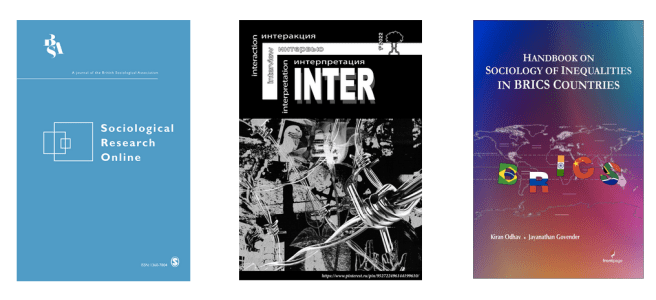
1. Together with Andrea Lizama and Denisse Sepúlveda, I co-edited a special section on social mobility and inequality issued in Sociological Research Online.

Cite article: Lizama-Loyola, A., Sepúlveda, D., & Vanke, A. (2022). Making Sense of Social Mobility in Unequal Societies. Sociological Research Online, 27(1), 95–100. https://doi.org/10.1177/13607804211066120

The special section takes a global perspective on different aspects of subjective social mobility and inequality. It includes six contributions covering the themes of political debate about social mobility in the UK and collective social mobility of working-class communities in Wales, intersectional inequality experienced by British-born Bengali Muslim women of working-class origin and educational mobility of people from different social backgrounds in Chile, social mobility of rural students in China and Chilean people’s experiences of long-range upward mobility shaped by meritocratic narratives.

Continue reading “The publications digest”

Как собрать данные в полевом качественном исследовании / How to Collect Data in Qualitative Field Research

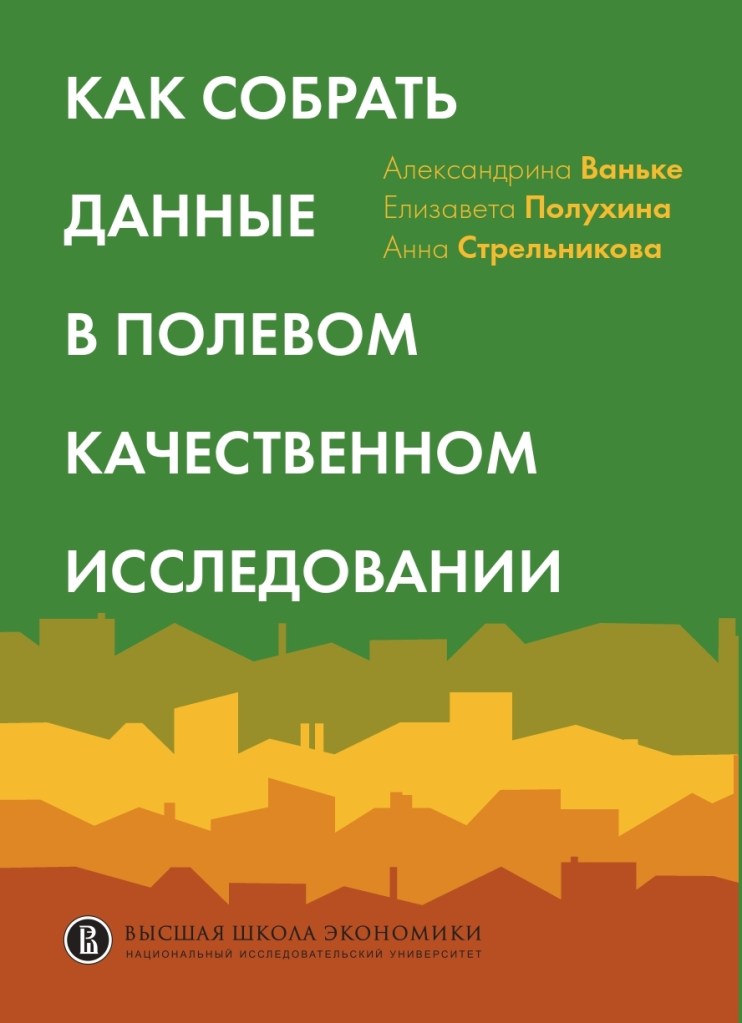
Копия Как собрать данные_обл_13 мм (1)_page-0001Наше учебное пособие в соавторстве с Елизаветой Полухиной и Анной Стрельниковой “Как собрать данные в полевом качественном исследовании” вышло в Издательском доме Высшей школы экономики. Пособие содержит информацию о качественных методах сбора эмпирических данных, которые мы применяли в наших совместных проектах последних лет. Книга приглашает читателя к размышлению о методологическом инструментарии и вносит вклад в дискуссию о том, как исследователи могут решать методические проблемы, возникающие в ходе полевой работы.

Ссылка: А. В. Ваньке, Е. В. Полухина, А. В. Стрельникова. Как собрать данные в полевом качественном исследовании. М.: Изд. дом Высшей школы экономики, 2020.

Как собрать данные_обл_13 мм (1)_pages-to-jpg-0001

Our handbook in co-authorship with Elizaveta Polukhina and Anna Strelnikova ‘How to collect data in qualitative field research’ has been published by The Higher School of Economics Publishing House. The handbook provides information about qualitative methods of data collection that we applied in our team projects in recent years. The book invites the reader to reflect on methodological tools and contributes to the debate on how researchers can solve some methods issues emerging during fieldwork.

You can download Chapter 1 (in Russian) by following the link: Designing Qualitative Field Research.

Reference: Vanke, A., Polukhina, E., Strelnikova, A. (2020). Kak sobrat’ dannye v polevom kachestvennom issledovanii [How To Collect Data in Qualitative Field Research]. Moscow: The Higher School of Economics Publishing House. (In Russian).

2nd year of the PhD: facing new challenges

Some people say that the 2nd year is the most exciting and easiest stage of the full PhD process. On the one hand, I agree with this, because at this point you know what you should do exactly and it is still far to write the whole thesis. On the other hand, each PGR student has its own path depending on her/his research project, so you never know what challenges may arise at this stage. During my 2nd year of the PhD in Sociology at the University of Manchester, I completed fieldwork, analyzed most of the empirical data, and gained teaching experience. I decided not to make these things all together and spent several months for each of these activities separately.

Teaching

In September 2018, I came back to Manchester from the 2nd field trip to Russia and as a teaching assistant joined two courses, Media, Culture & Society and Researching Culture & Society, given at the University of Manchester. Before the PhD I had already taught in Moscow Universities. However, as far as British and Russian systems of higher education differ, there was something new for me to learn. New teaching assistants have to take introductory courses explaining, for example, how to protect confidential information about students, how to solve a problem of cultural diversity in the classroom, how to assess students’ records and give feedback, etc. Only after the completion of these introductory courses you are allowed to start teaching.

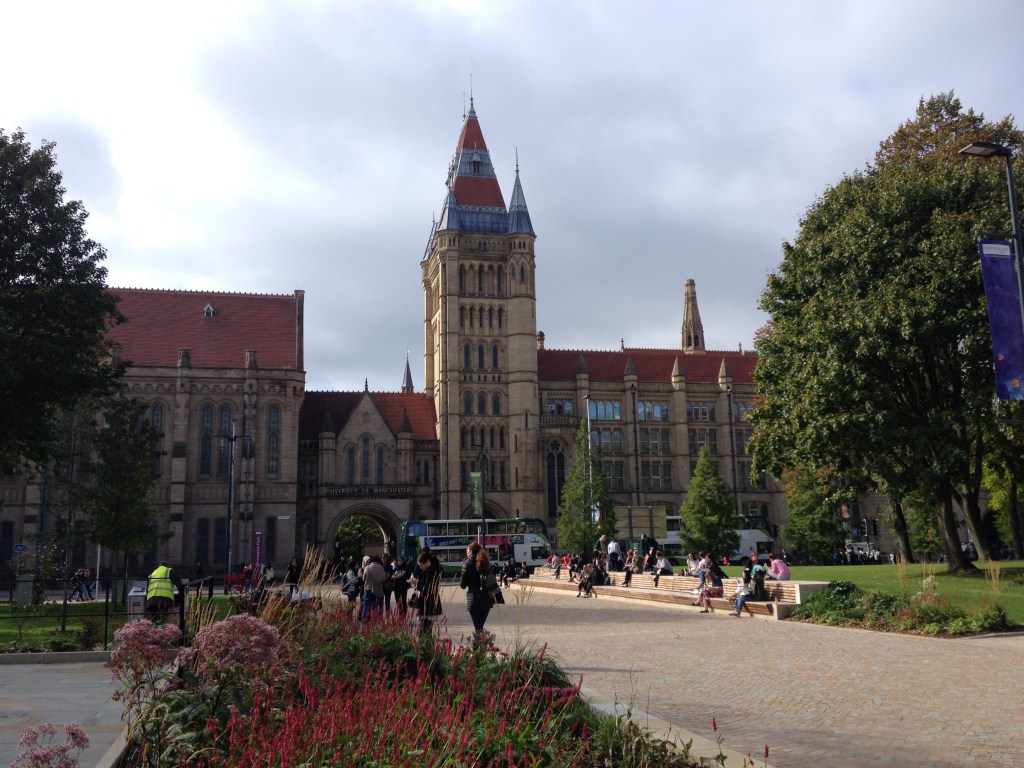
IMG_2772The Whitworth Building of the University of Manchester. Photo by Alexandrina Vanke

From October to December 2018, I gave seminars (called tutorials at the University of Manchester) in four groups, in two for each of the course. There were approx. 10 students in each group. It took me two-three days of preparation, and one day of teaching. Normally teaching assistants should read the required and additional literature for tutorials (up to 10 positions for one tutorial) and facilitate a discussion in the classroom. Lecturers prepare questions for the discussion beforehand. You may be creative and add something else but a seminar has already a structure though. The things you are required to do is to help students to get answers to the questions based on the reading and support them in critical debating the issues formulated by the lecturer.

By the mid-autumn, each student had to submit a written work on one of the topics proposed by the lecturer and based on the recommended reading. For me, the assessment of students’ essays was the most time-consuming part of teaching. It was absolutely different from the assessment process I used to do in Russian Unis. At the University of Manchester, you should estimate an essay on a 100-point scale and explain in detail (i.e. to write feedback), why you gave a particular mark to a student. In addition, you should assess different elements of each essay on a 10-point scale, e.g. creativity, methodology, originality, critical reflection, arguments, etc.

IMG_2780.JPGThe campus of the University of Manchester. Photo by Alexandrina Vanke

At the time of teaching, I spent one-two days in the working week for my PhD research and sometimes weekends. In spite of new challenges, it was really great for me to change the activity: to switch from fieldwork to teaching. In addition, I got to know some new approaches from the course Media, Culture & Society, which I may use in PhD, and broadened knowledge in qualitative research methods thanks to the course Researching Culture & Society. At the beginning of December 2018, I went to Boston to present PhD research at the Annual Conference of the Association for Slavic, East European, and Eurasian Studies. After coming back to Manchester I gave the final class and in the next couple of days headed to Moscow to undertake the final phase of fieldwork.

Fieldwork

The research design of my PhD project ‘Working-class life and struggle in post-Soviet Russia’ is based on the approach of multi-sited ethnography and involved collecting ethnographic data in two localities. Fieldwork took place in two field sites and was split into three phases. By the end of the 1st year of the PhD (read more: here), I had two field trips to Yekaterinburg and Moscow and collected most of the empirical data in two industrial neighbourhoods located in these two cities. After the 2nd field trip, I formulated some new suggestions, which needed to be supported by additional empirical data.

To check the provisional arguments, I decided to undertake the 3rd phase of fieldwork in Moscow between December 2018 and January 2019. During this final field trip, I came back to the examined Moscow neighbourhood and conducted some more interviews with its residents. However, this phase aimed at researching the experiences of workers who took part in trade union activity. As far as this winter field trip coincided with long New Year celebrations in Russia, it was quite problematic to arrange meetings with potential participants. If people agreed for the interviews, our talks were long and occurred in a warm and relaxing atmosphere, sometimes over tea at the participant’s place.

Sociology PGR Colloquium

An announcement of my presentation at the colloquium. Made by Francisca Ortiz Ruiz

In February 2019, I finished collecting data and came back to Manchester being ready to move onto the next stage of data analysis. Finally, my database consisted of 53 ethnographic interviews, 155 pages of field notes, more than 550 photographs and other visual data. I was invited to present the PhD project at the PGR colloquium organized by my peers from Sociology. The process of preparation for the colloquium allowed me to build a more or less coherent visual narrative with sociological ethnography and to see that I had enough empirics for putting a puzzle together.

Data analysis

The spring semester of the 2nd year was fully dedicated to work with empirical data. First of all, interview transcripts needed anonymization and creation of an anonymization log with records about places data, which was removed or replaced by pseudonyms. I changed the names of research participants, and the names of their relatives and friends mentioned in interviews, the names of neighbourhoods, streets, and other recognizable spots, numbers of schools and house buildings, etc.

IMG_5238.JPGMy desk in the office of the Department of Sociology. Photo by Alexandrina Vanke
At the next stage, from March to July 2019, I coded all anonymized interview transcripts in NVivo 12 software. Before coding my supervisors advised me to choose three absolutely different interviews from the data set – I chose one interview from each of three fieldwork phases – and to create the initial codes, which changed slightly in the following process of coding. At the beginning, the codes looked a bit unstructured, but later I restructured them and generated child codes related to the key categories. On the one hand, the process of coding was routine and monotonous. On the other hand, coding in NVivo helped me to structure ethnographic data and create a detailed hierarchy of codes, which consists of more than 670 items now.

I generated some codes ‘bottom-up’ from empirical data and some codes ‘top-down’ by keeping in mind theory. Now it is clear that coding in NVivo was the first step toward bridging empirical data with theory, theory with empirical data in my PhD research. Emotions were also there. While rereading interviews, I was sometimes weeping, sometimes laughing. Well, the everyday life of workers in Russia is really hard, but there is also a place for humour and resilience.

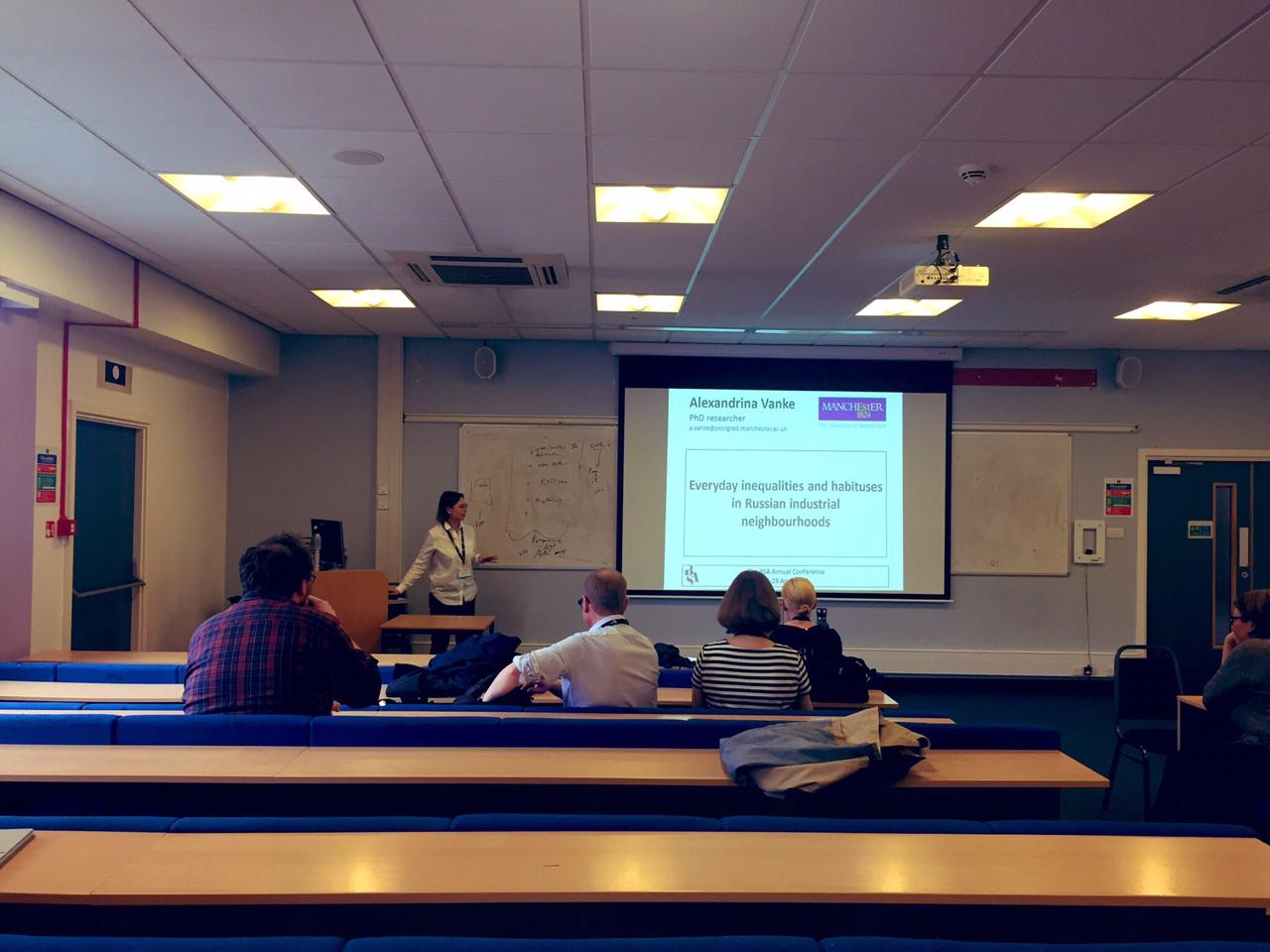
IMG_5698Presenting PhD research at the BSA conference. Photo by Francisca Ortiz Ruiz

In April I presented the intermediated results of data analysis at the Annual Conference of the British Sociological Association which took place in Glasgow. May and June were fully spent on preparing a field report and other research documents for the annual review. In the field report, I tried to write a sociological ethnography – which was not easy for me – and figured out how the empirical chapters of the thesis may look like. At the end of the 2nd year of the PhD I presented the field report at the annual review. The reviewer gave me insightful feedback on empirical research and helpful advice on the theoretical framework. Inspired by the stimulating discussion at the annual review, I am looking forward to moving onto the next stage and starting writing the thesis.